Horus and the Architecture of Awareness: Why Blind Infrastructure is a Strategic Liability
A live trading system can run for 7 hours in a hung state — generating signals, consuming resources, appearing healthy — while producing nothing. This is not a technical failure. It is an intelligence failure. Horus is the answer.
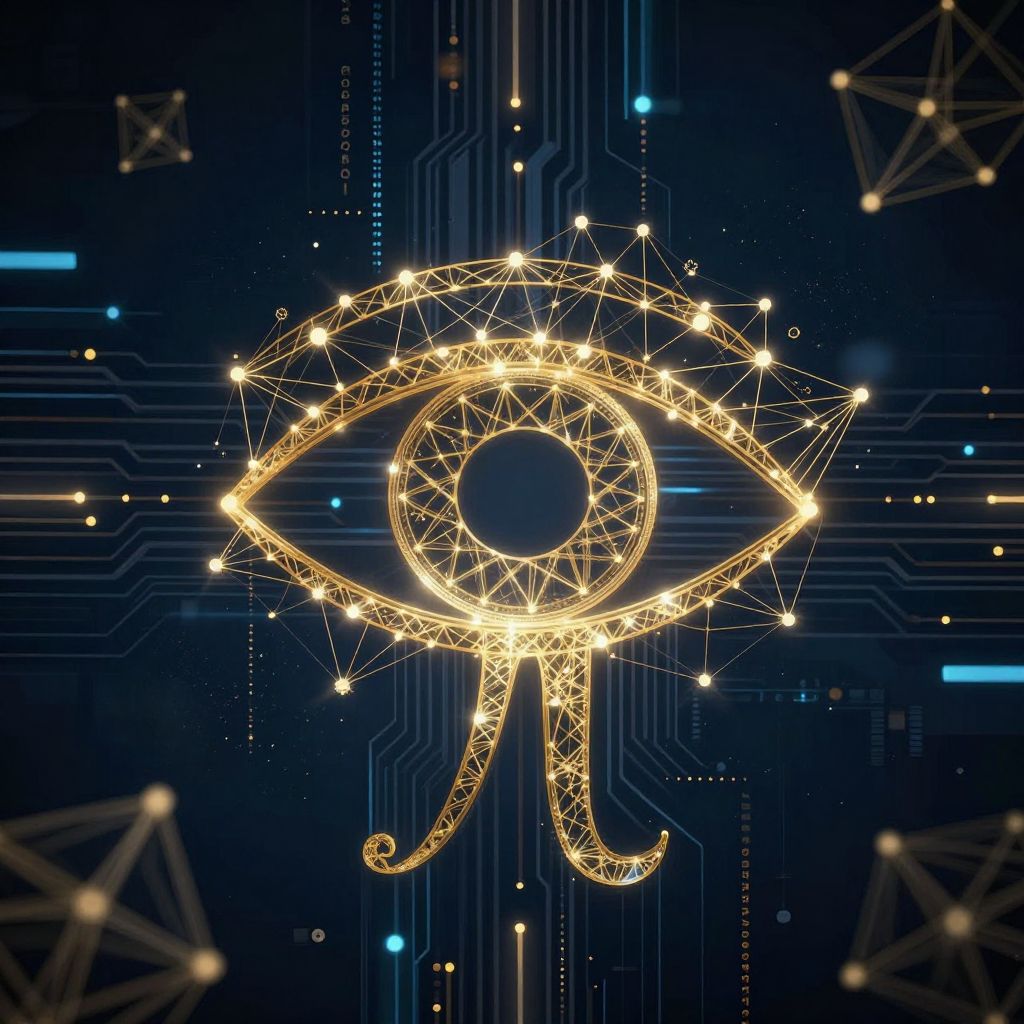
The Eye of Horus is one of the oldest symbols of protection in recorded history. In ancient Egyptian belief, it represented the capacity to see what others could not — to perceive threats before they became catastrophes, and to act on that perception in time to matter.
Modern infrastructure has the same problem Egyptian pharaohs did: the things most likely to destroy you are the ones you aren't watching.
The Intelligence Gap in Production Systems
Consider what happened in a live AI trading system last night.
A Python asyncio bot was scanning crypto prediction markets, scoring opportunities, and placing bets with real capital. At 4:19 PM, the system entered a hung state — its internal event loop blocked on an external API call with no timeout. The process remained technically alive. Heartbeats stopped. Signals kept scoring. Orders never executed.
For seven hours.
The system generated a STRONG conviction signal every single second for the duration. ETH scored 89/100 — high enough to trigger an order under any normal conditions. But the execution layer was frozen, and nothing in the infrastructure knew to intervene.
This is not primarily a software bug. It is a structural intelligence gap.
The system lacked the capacity to observe itself accurately and respond to what it observed. That gap — between what a system appears to be doing and what it is actually doing — is one of the most dangerous vulnerabilities in modern AI-driven platforms.
What Awareness Actually Requires
Intelligence, at its core, is the capacity to perceive signal in noise and act on it faster than the situation changes. Applied to infrastructure, that means three things:
Continuous observation. Not periodic health checks. Not dashboard reviews. Continuous, automated assessment of system state — heartbeat freshness, API responsiveness, port availability, process liveness — running on a cadence short enough to catch failures before they compound.
Autonomous interpretation. The ability to distinguish a transient anomaly from a genuine failure. A single failed health check might be a network blip. Two consecutive failures on a system that normally never fails is a pattern. Awareness requires the judgment to tell the difference without human intervention.
Decisive action. Observation and interpretation are worthless if they don't trigger a response. When a system is confirmed dead, something must act — restart the process, notify the team, log the failure — within a timeframe that limits the damage. Not within the hour. Not when someone happens to check the logs. Now.
Most infrastructure monitoring systems handle observation adequately. Very few automate interpretation and action at the same time.
The Horus Model
The self-healing watchdog daemon built in response to this incident was named Horus deliberately. The all-seeing eye of the platform.
The design reflects a specific philosophy about infrastructure awareness:
Detection before alerting. Most monitoring tools are built to notify humans of problems so humans can solve them. Horus is built to solve problems without requiring human awareness at all. The notification is confirmation of what already happened, not a request for action.
Hierarchy of checks. Different failure modes require different detection strategies. A hung asyncio event loop is invisible to a port check but obvious to a log staleness check — a bot that isn't logging hasn't stalled its port, but it has stalled its function. Matching the check type to the failure mode is what separates genuine awareness from checkbox compliance.
Proportional response. The heal action is matched to the failure type. A hung process gets a SIGTERM (the OS and launchd handle the restart). A crashed Docker container gets compose restart. A failed launchd service gets kickstart. The system knows the appropriate intervention for each failure class.
Self-protection. Horus runs under the same launchd KeepAlive mechanism it uses to protect other services. If Horus itself crashes, launchd restarts it. The watchdog is watched.
Why This Is a Strategic Question, Not Just a Technical One
Platform reliability is not a neutral operational concern. It is a competitive differentiator.
Every hour a trading system runs in a hung state is an hour of missed opportunity. Every hour a content pipeline is down is an hour of lost throughput. When an API gateway is unresponsive, user experience degrades and costs accrue. These are not abstract risks — they are direct costs measured in signals not captured, trades not placed, relationships not maintained.
The organizations with genuine competitive advantage in AI-driven workflows are not necessarily the ones with the best models or the most data. They are the ones whose systems run the longest without human intervention, recover fastest when they fail, and generate the highest ratio of productive compute hours to total uptime.
Self-healing infrastructure is not a feature. It is the foundation on which every other capability compounds.
The Three-Layer Reliability Stack
The architecture that emerges from this failure analysis has three layers that must work together:
Layer one: in-call timeouts. Every external API call must have an explicit timeout. In asyncio Python, this means asyncio.wait_for(coroutine, timeout=30.0) around every awaitable that touches a network resource. No exceptions. An unguarded await is a potential event loop freeze waiting for the wrong network response.
Layer two: in-process liveness monitoring. A separate thread, independent of the main event loop, that monitors whether the loop is making progress. If the main loop stalls for more than N seconds, this thread sends SIGTERM to the process. launchd handles the restart. The process never hangs for longer than the watchdog interval.
Layer three: external observation. Horus, or a system like it, watching from outside. Log staleness, port availability, HTTP health — checked every 30 seconds, with automated healing when failures cross the threshold. This is the catch layer for everything that the internal mechanisms miss.
The seven-hour incident would have been resolved in under 45 minutes with all three layers in place. Layer three alone — Horus detecting the stale log and killing the process — would have limited the gap to under 10 minutes.
Awareness as Organizational Discipline
The deeper lesson from this incident is not technical. It is organizational.
Systems do not fail because engineers wrote bad code. They fail because the organization did not build awareness into the architecture as a first-class requirement — equal in priority to the feature work the system exists to perform.
Every long-running process deserves explicit answers to these questions before it goes to production:
- What does healthy look like, and how is that measured continuously?
- What does unhealthy look like, and how long before the system knows?
- What is the automated response when unhealthy is confirmed?
- Who gets notified, and through what channel, and how quickly?
These are not afterthoughts. They are the structural requirements of any system that is expected to operate without constant human supervision.
The Eye of Horus sees everything. The question is whether you've given it eyes.
Horus monitors seven services in the Invictus Labs platform: the live trading bot, mission control frontend and backend, the OpenClaw gateway, Excalidraw MCP, and the primary application stack. It runs on a 30-second cycle, heals automatically, and sends notifications through Discord and the OpenClaw event bus. The entire daemon is under 300 lines of pure Python stdlib.
Explore the Invictus Labs Ecosystem
Follow the Signal
Intelligence dispatches, system breakdowns, and strategic thinking — follow along before the mainstream catches on.