Oracle Intelligence: Why the Future Is Already Visible to Those Who Read the Signals
The oracle isn't a mystic with foresight — it's an analyst with better information and a systematic approach to interpreting it. Every major market shift was preceded by visible signals. The question is who was reading them.
The ancient oracle at Delphi was not supernaturally gifted. She was extraordinarily well-informed.
Delphi was a convergence point — kings, generals, and merchants traveled there from across the Mediterranean to share their information, their concerns, and their plans. The oracle received this information continuously and synthesized it into guidance that appeared prophetic but was actually analytical.
The "prophecy" was intelligence.
This is the thesis underlying everything at Tesseract Intelligence: the future is not hidden. It's visible in the signals — patent filings, job postings, regulatory disclosures, narrative shifts, executive communications. The people who appear to see the future are the people who are systematically reading these signals before the broader market notices them.
The Signal-to-Announcement Gap
Every major market shift that looks like a surprise has a signal trail that, in retrospect, was visible.
The AI renaissance of the 2020s was preceded by: a surge in ML research publications (visible in arxiv), a wave of talent hiring from university AI labs to tech companies (visible in LinkedIn), a dramatic increase in GPU procurement (visible in NVIDIA's earnings), and a proliferation of AI infrastructure startups receiving significant venture funding (visible in Crunchbase).
None of these signals were hidden. They were public. The "surprise" of ChatGPT's impact was only surprising to people who weren't systematically monitoring the signal environment.
Competitive intelligence at its highest level is closing this gap — between when signals appear and when the market consensus incorporates them.
The Three Layers of the Signal Hierarchy
Layer 1: Primary signals — directly observable facts about companies and markets. Job postings, patent filings, regulatory filings, pricing changes, product releases. These are the raw data of competitive intelligence.
Layer 2: Derived signals — patterns that emerge from aggregating and analyzing primary signals over time. Hiring velocity trends, patent portfolio evolution, pricing strategy shifts, narrative migration patterns. These require synthesis but offer interpretive power.
Layer 3: Narrative signals — the stories that are forming in the expert community before they reach mainstream consensus. Academic discussions, specialized community debates, expert disagreements on specific technical or market questions. These are the earliest-phase signals — highest alpha, lowest confidence.
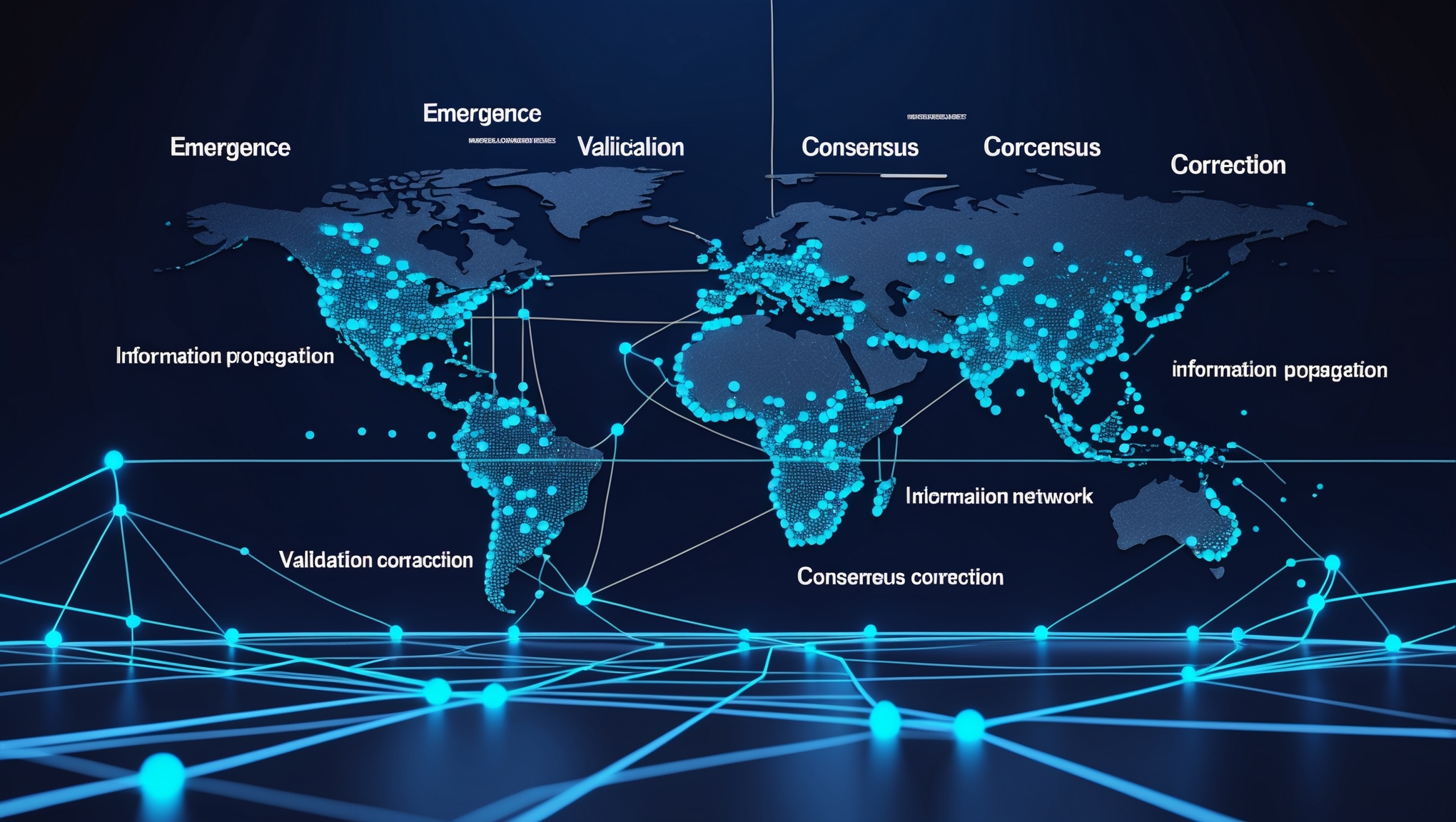
Oracle Intelligence operates across all three layers simultaneously — collecting primary signals continuously, deriving patterns from the aggregate, and monitoring the leading edges of narrative formation.
The Modern Oracle's Architecture
The oracle at Delphi had a physical convergence of information sources. Modern intelligence requires a digital equivalent:
Continuous collection: Automated monitoring across hundreds of relevant sources — not batch collection, but event-driven ingestion that captures signals when they appear, not hours or days later.
Semantic synthesis: Information without interpretation is noise. Semantic synthesis converts information flows into narrative-aware intelligence — contextualizing each signal against the current strategic picture.
Alert and dispatch: The output isn't a database to query. It's a continuous stream of synthesized intelligence, delivered in a format that enables immediate decision-making.
This architecture is what Tesseract is building — the modern oracle for competitive intelligence.
What Oracle-Level Intelligence Enables
Organizations with oracle-level intelligence capability make different kinds of decisions:
Product decisions: Product roadmap choices informed by signals about where the market is going before consensus forms, not where it is now.
Strategic decisions: Partnership, acquisition, and competitive positioning choices informed by the current competitive reality, not the lagging consensus narrative.
Investment decisions: Capital allocation based on signals about which market segments are gaining momentum and which are consolidating — before those signals are priced into valuations.
Talent decisions: Hiring for capabilities that will be critical 12-18 months from now, informed by signals about where the market is heading.
In each case, the advantage is timing. The same decision made 12 months earlier — based on signals that were available but not synthesized — generates dramatically better outcomes than the same decision made at consensus.
The Oracle's Obligation
Intelligence carries responsibility. The oracle who had better information than the generals who came to consult her had an obligation to use that information to serve those consultations — not to hoard it for personal advantage.
The modern intelligence practitioner has an equivalent obligation: to surface what the signals are saying honestly, including when they contradict the preferred narrative of the decision-maker receiving the intelligence.
Oracle intelligence isn't telling people what they want to hear. It's telling them what the signals say.
That distinction — between confirmation and intelligence — is the difference between an advisory practice and a flattery practice. Tesseract is built for the former.
The future is visible to those who read the signals. That's what we're building the capability to do.
Explore the Invictus Labs Ecosystem
Follow the Signal
Intelligence dispatches, system breakdowns, and strategic thinking — follow along before the mainstream catches on.